Knowledge & Ideas

AI Research & Insights

Explore our curated reading material, case studies, and engineering articles designed for the AI-first enterprise.

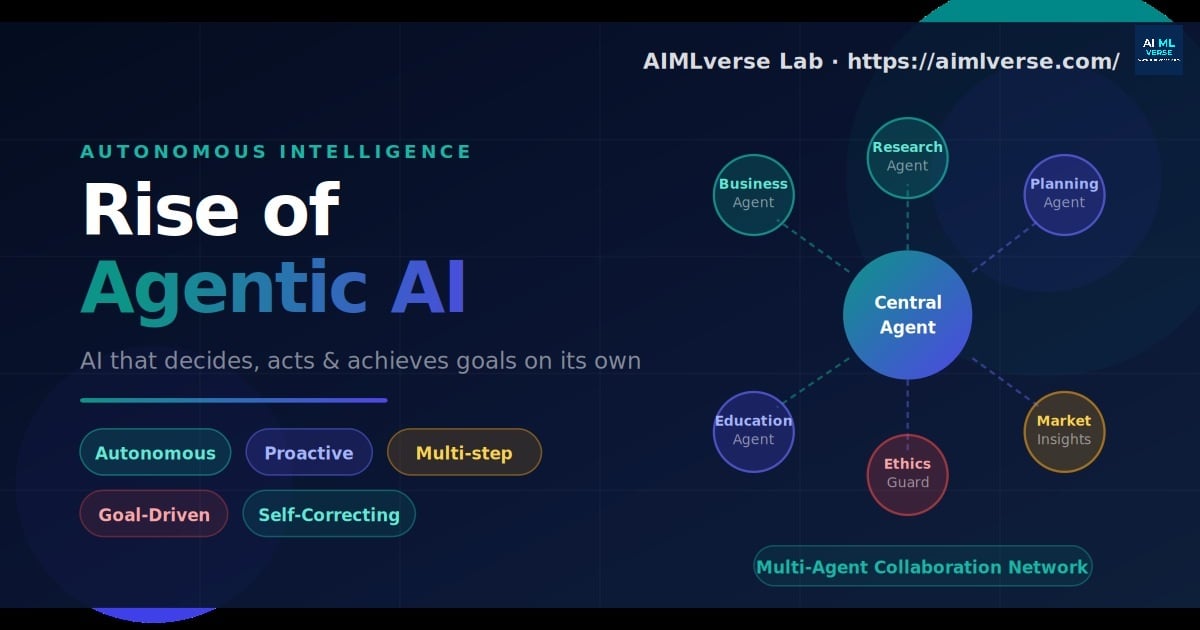
Agentic AI illustration
Featured Strategy • 4 Min Read

Rise of Agentic AI

AI systems no longer wait for your prompt. They plan, decide, and act autonomously. This piece unpacks what agentic AI means for every industry and why intent now matters as much as intelligence.

Read Featured Article →
AI Agents • 7 Min Read

Human-in-the-Loop AI

Implementing safeguards in autonomous workflows for accountability.

Coming soon
Industry News • 5 Min Read

Startups & AI: The Disruption

Why legacy moats are disappearing and what MSMEs can do to stay aggressively competitive in an AI-first era.

Coming soon
Security • 4 Min Read

Securing LLMs in Production

Explore the strategies and architectures to prevent prompt injection and secure your enterprise AI models.

Coming soon

Frequently Asked Questions

Common queries about Enterprise AI, Agentic Automation, and Custom LLM Deployment.

What is Agentic Automation and how does it differ from RPA?

Agentic Automation utilizes autonomous AI agents (powered by LLMs) that can reason, plan, and execute complex workflows dynamically. Unlike traditional RPA (Robotic Process Automation) which relies on rigid, rule-based scripts, Agentic AI can adapt to exceptions, understand unstructured text, and make context-aware decisions.

How do I measure the ROI of an Enterprise AI implementation?

The ROI of Enterprise AI is measured by calculating tangible gross margin improvements, such as reduction in manual processing hours, increased throughput in document handling (via Document AI), and faster decision-making cycles. Our AI ROI framework specifically maps engineering spend against these measurable operational KPIs.

Why are custom LLM platforms better than public APIs for enterprises?

Custom LLM platforms provide complete data privacy, allowing enterprises to securely process proprietary data without leaking it to public models. Furthermore, custom platforms enable multi-model routing to optimize for cost and latency, ensuring predictable, secure, and compliant production deployments.